







Most plumbing problems do not start with a burst pipe. They begin quietly. A slow drain that takes a little longer each week. A small stain beneath the kitchen sink. Rust around the water heater that seems harmless until it is not.
That is why a plumbing inspection checklist is more than a list of items. It is a practical way to understand the condition of your home's plumbing system before minor concerns become expensive repairs.
Whether you are buying a home, preparing to sell, or keeping up with routine maintenance, knowing what inspectors evaluate helps you make informed decisions. A professional plumbing inspection looks beyond obvious leaks and considers how the entire system is performing, from the water entering the home to the wastewater leaving it.
This guide explains exactly what a plumbing inspection checklist includes, why each component matters, common issues inspectors find, and the simple steps homeowners can take to keep their plumbing system in good condition.
Who Should Use a Plumbing Inspection Checklist?
Many homeowners assume plumbing inspections are only necessary when something goes wrong. In reality, the best time to inspect a plumbing system is before problems become visible.
A plumbing inspection checklist is especially useful if you are:
- Buying an existing home
- Selling your property
- Living in an older home with aging plumbing
- Experiencing recurring leaks, slow drains, or fluctuating water pressure
- Completing major renovations
- Keeping up with routine home maintenance
Even if your plumbing appears to work normally, hidden deterioration can develop over time. An inspection provides a clearer picture of the system's condition and highlights areas that may require monitoring.
The Complete Plumbing Inspection Checklist
Every home is different, but most residential plumbing inspections follow the same overall process. Instead of focusing on a single fixture, inspectors evaluate the visible plumbing system from one end of the home to the other.
Below is a complete plumbing inspection checklist that explains what gets inspected and why each item matters.
Water Supply System
The inspection usually begins where clean water enters the home.
Supply pipes are responsible for delivering water to every faucet, shower, toilet, appliance, and fixture. Since these pipes remain under pressure throughout the day, even small defects can eventually lead to significant water damage.
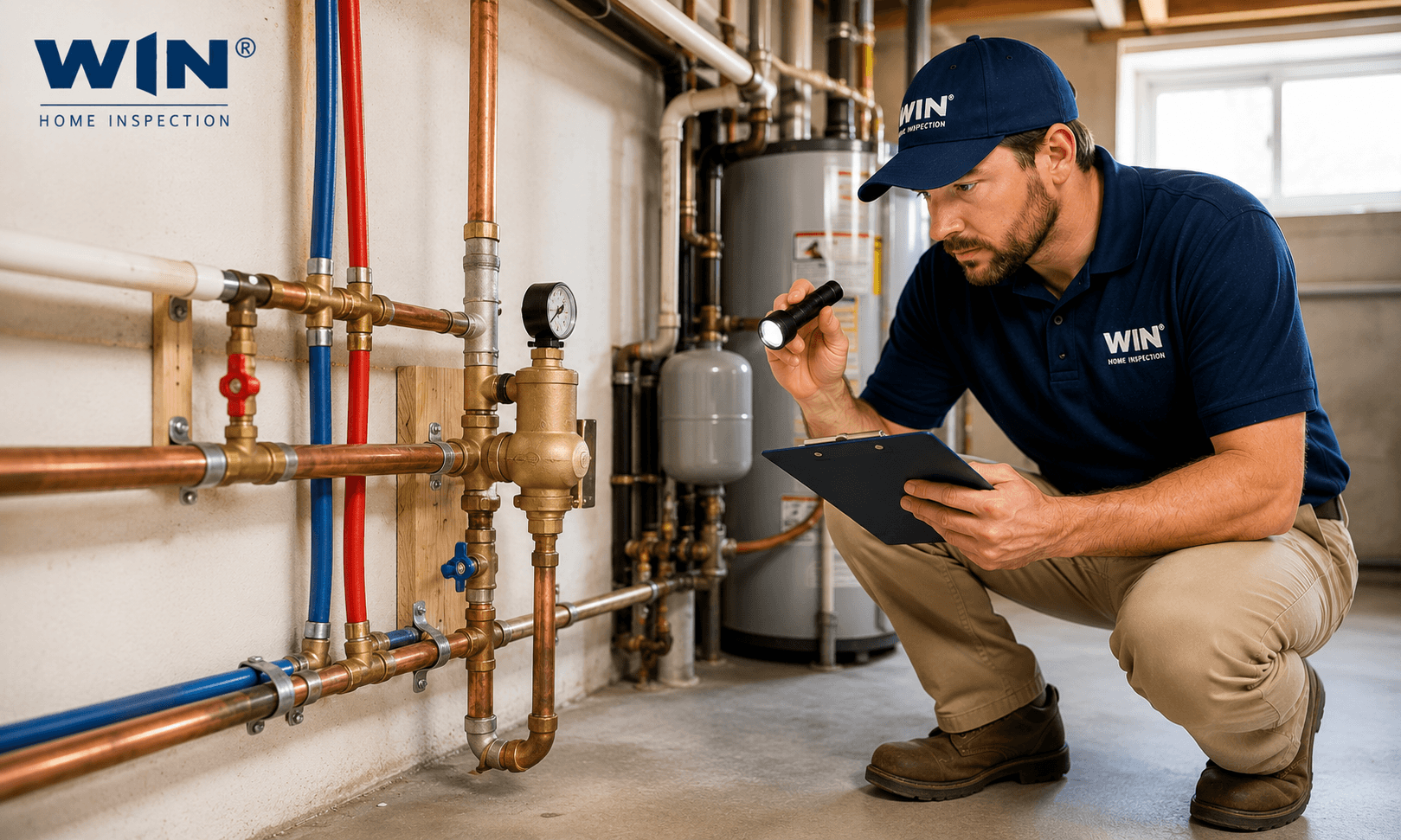
During this portion of the plumbing inspection checklist, inspectors examine:
- Visible water supply pipes
- Pipe material
- Signs of corrosion
- Active leaks
- Damateur or previous repairs
- Loose fittings
- Proper pipe support
- Water stains around exposed plumbing
Different pipe materials age differently, making identification an important part of the inspection.
Inspectors also pay close attention to exposed plumbing in basements, crawl spaces, garages, and utility rooms because these locations often reveal leaks before they become visible elsewhere inside the home.
Water Pressure and Flow
Water pressure affects the performance of every plumbing fixture in the house.
Pressure that is too low can make showers frustrating and appliances less efficient. Pressure that is too high creates unnecessary stress on pipes, valves, fittings, and household appliances.
Rather than measuring only one fixture, inspectors evaluate how water flows throughout the home while watching for signs that indicate inconsistent pressure or restrictions within the plumbing system.
This part of the plumbing inspection checklist typically includes:
- Overall water flow
- Consistency between fixtures
- Signs of excessive pressure
- Visible pressure-related wear
- Performance of multiple fixtures operating together
Plumbing Fixtures
Kitchen and bathroom fixtures receive daily use, making them some of the first places where plumbing problems appear.
Each accessible fixture is operated during the inspection to verify proper operation and identify leaks that homeowners may not have noticed.
Inspectors check:
- Kitchen sinks
- Bathroom sinks
- Faucets
- Bathtubs
- Showers
- Toilets
- Laundry sinks where present
While evaluating fixtures, inspectors also look for:
- Dripping faucets
- Loose fixtures
- Slow drainage
- Worn supply lines
- Water beneath sinks
- Damaged seals
- Improper installation
A cabinet beneath a sink often tells a larger story than the fixture above it. Even minor discoloration, swelling, or moisture can point to a leak that has existed for quite some time.
Drainage System
Getting clean water into the home is only half of the plumbing system. Wastewater must also leave efficiently.
The drainage portion of a plumbing inspection checklist focuses on how well sinks, tubs, showers, and toilets remove wastewater.
Inspectors look for:
- Slow drains
- Standing water
- Gurgling sounds
- Sewer odors
- Visible drain leaks
- Improper drain connections
- Previous plumbing repairs
A single slow drain may simply indicate buildup within that fixture.
When multiple drains perform poorly or unusual odors are present throughout the home, the issue may extend beyond an individual fixture and warrant additional evaluation.
Water Heater
The water heater is one of the hardest-working appliances in any home, making it an important part of every plumbing inspection checklist.
Inspectors evaluate the overall condition of the unit while looking for signs of aging, deterioration, or improper installation.
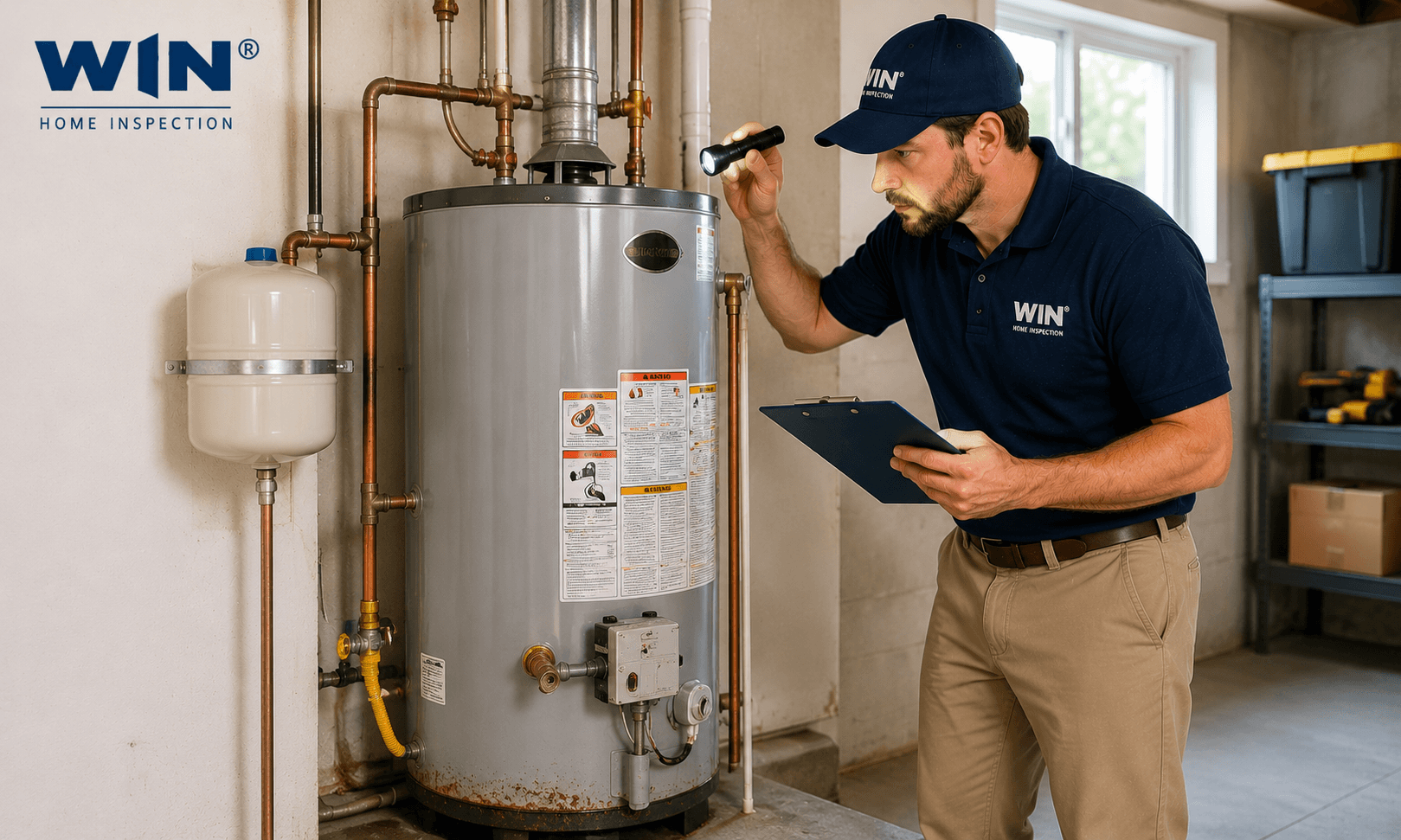
Items commonly reviewed include:
- Approximate age
- Visible corrosion
- Rust
- Active leaks
- Plumbing connections
- Temperature and pressure relief valve
- Signs of moisture around the base
- General operating condition
Even when a water heater is still producing hot water, visible corrosion or deterioration can indicate that the unit is approaching the end of its expected service life.
Shut-Off Valves
Shut-off valves rarely receive attention until an emergency happens. A plumbing inspection includes checking accessible shut-off valves because they provide the fastest way to stop water flow during a plumbing failure.
Inspectors review:
- Main water shut-off valve
- Fixture shut-off valves
- Signs of corrosion
- Accessibility
- Visible leaks
A valve that cannot be operated easily may become a problem when every minute counts.
Common Plumbing Problems Found During an Inspection
A plumbing inspection is not about finding faults for the sake of it. It is about identifying conditions that could affect the safety, reliability, or performance of the plumbing system. Some findings may only require routine maintenance, while others deserve prompt attention.
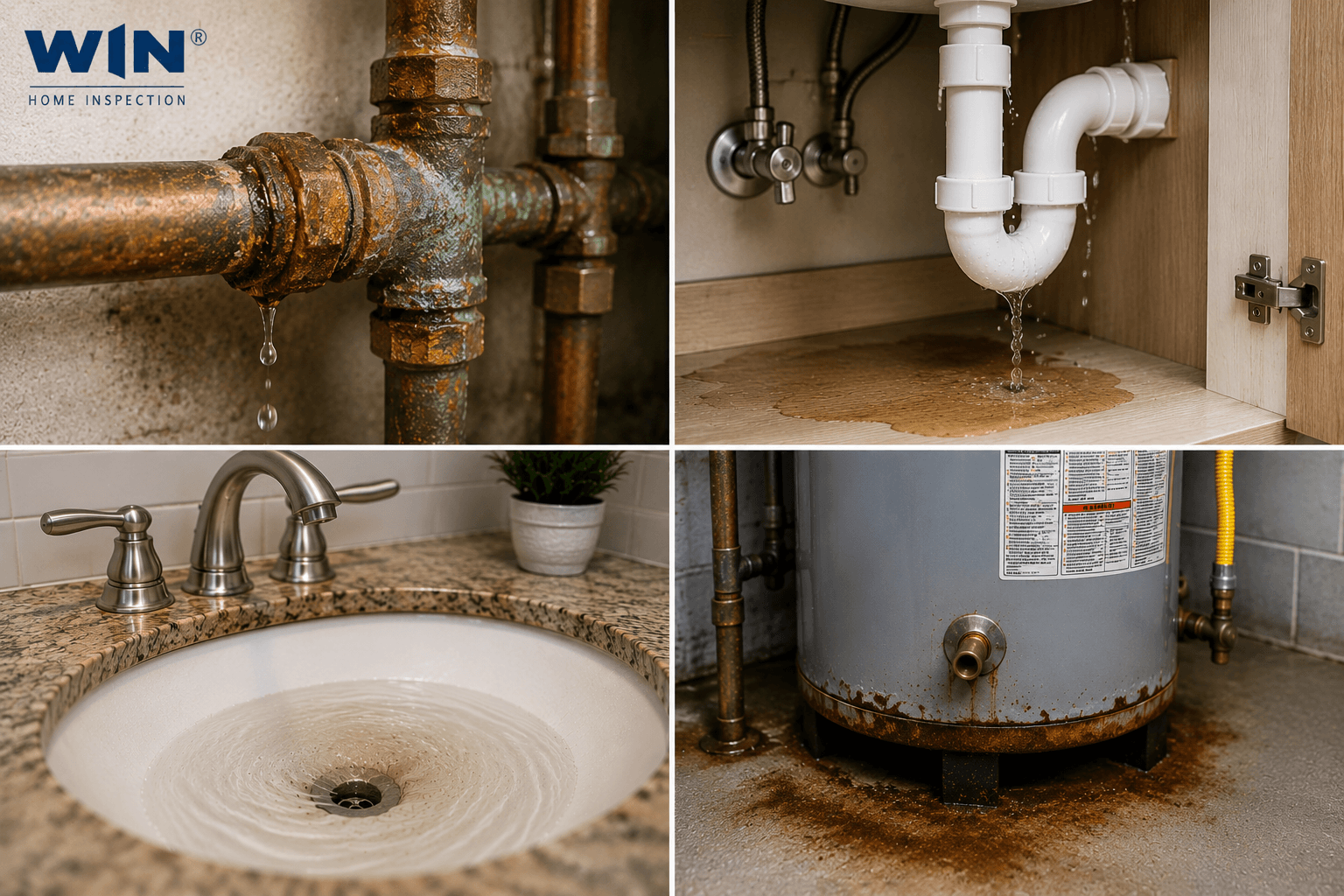
Here are some of the most common issues inspectors encounter during a residential plumbing inspection.
Corroded or Aging Pipes
Older plumbing materials naturally wear over time. Corrosion, rust, mineral buildup, and deteriorating pipe walls can restrict water flow and increase the likelihood of leaks. The condition of the pipes, along with their material and visible deterioration, helps determine whether they should simply be monitored or evaluated further.
Active Plumbing Leaks
Not every leak is obvious. Some appear as dripping fittings, while others leave subtle clues such as water stains, swollen cabinetry, peeling paint, or damp insulation. Finding a leak early can help prevent more extensive damage to walls, flooring, cabinets, and structural components.
Slow or Poor Drainage
Water that drains slowly from multiple fixtures may indicate a larger drainage issue rather than a simple clog. Inspectors look for recurring drainage problems because they can point to restrictions, damaged drain lines, or other conditions that affect the plumbing system's ability to move wastewater efficiently.
Water Heater Deterioration
A water heater may continue producing hot water even as its condition declines. Rust, corrosion, moisture around the base, or deteriorated plumbing connections often indicate that the unit should be monitored closely or evaluated further.
Water Pressure Concerns
Consistently low water pressure can affect everyday comfort, while excessively high pressure may place unnecessary strain on plumbing fixtures and appliances. Although pressure alone does not confirm a plumbing defect, it often provides valuable clues about the overall condition of the system.
What a Plumbing Inspection Cannot Reveal
A plumbing inspection evaluates the visible and accessible components of the plumbing system. Because the inspection is non-invasive, some conditions cannot be confirmed without specialized equipment or destructive testing.
A standard plumbing inspection typically does not include:
- Plumbing hidden behind finished walls or ceilings
- Underground water supply lines
- The interior of sewer lines
- Components concealed beneath flooring
- Internal pipe blockages that cannot be observed visually
- Plumbing systems that are inaccessible during the inspection
If visible conditions suggest a larger issue, additional evaluation may be recommended to better understand the problem.
Home Plumbing Maintenance Checklist
Routine maintenance can extend the life of your plumbing system and reduce the chances of unexpected repairs.
Every Month
- Check beneath sinks for moisture or leaks.
- Listen for running toilets after flushing.
- Watch for slow drains.
- Look for new water stains on ceilings, walls, or cabinets.
Every Season
- Inspect exposed plumbing for corrosion or damage.
- Test accessible shut-off valves to confirm they operate smoothly.
- Check outdoor hose bibs for leaks or damage.
- Look around the water heater for signs of moisture or rust.
Every Year
- Inspect visible plumbing connections throughout the home.
- Review the condition of supply lines connected to appliances.
- Check caulking around tubs, showers, and sinks.
- Schedule a plumbing inspection if you notice recurring plumbing issues or changes in system performance.
Keeping up with small maintenance tasks often helps homeowners identify developing problems before they become larger repairs.
How to Prepare for a Plumbing Inspection
A few simple steps can help make the inspection more efficient.
Before the appointment:
- Clear access to the water heater.
- Make the main water shut-off valve accessible.
- Remove stored items beneath kitchen and bathroom sinks.
- Unlock crawl spaces or utility rooms if applicable.
- Gather records of recent plumbing repairs or replacements.
- Make a note of any plumbing concerns you have observed, including slow drains, leaks, unusual noises, or changes in water pressure.
Providing easy access allows the inspector to evaluate more of the plumbing system during the visit.
Final Thoughts
Most plumbing systems do not fail without warning. They usually provide small clues long before a major problem develops. A plumbing inspection checklist helps identify those warning signs by evaluating the visible condition of pipes, fixtures, drains, shut-off valves, and the water heater.
Whether you are buying a home, maintaining your current property, or preparing to sell, understanding what gets inspected allows you to make more informed decisions about your home's plumbing system.
While no visual inspection can uncover every hidden issue, a thorough evaluation provides valuable insight into the overall condition of the plumbing and highlights areas that may require monitoring or further attention.
Frequently Asked Questions
What is included in a plumbing inspection checklist?
A plumbing inspection checklist typically includes water supply pipes, drain lines, plumbing fixtures, toilets, tubs, showers, water pressure, shut-off valves, the water heater, and visible signs of leaks, corrosion, or water damage.
How is a plumbing inspection different from a general home inspection?
A general home inspection evaluates many systems throughout the property, including roofing, electrical, HVAC, and structural components. A plumbing inspection focuses specifically on the visible plumbing system and provides a more detailed evaluation of its condition.
Can a plumbing inspection find hidden leaks?
Inspectors can identify visible signs that suggest hidden leaks, such as moisture stains, damaged materials, or corrosion. However, plumbing concealed behind finished walls, ceilings, or floors cannot be visually inspected during a standard inspection.
What are the most common plumbing issues inspectors find?
Common findings include leaking fixtures, corroded pipes, aging plumbing materials, slow drains, deteriorating water heaters, worn shut-off valves, and visible signs of water damage.
How often should a home's plumbing be inspected?
The frequency depends on the age and condition of the home. Many homeowners choose to schedule a plumbing inspection when buying or selling a property, after recurring plumbing problems, or as part of routine home maintenance to help identify developing issues early.

Related Articles
View All

Get the Latest Insights!
Sign up to stay up to date with latest tips, trends and updates from WIN.